Types of aerial hoops: mounts, crossbars and designs
The aerial hoop is one of the most popular apparatuses used in aerial acrobatics. At first glance, different aerial hoops may look very similar, but their design and suspension configuration can significantly affect how the apparatus moves, spins and can be used for different elements.
Aerial hoops can be made without mounts, with one or two mounts, with removable mounts, or with a crossbar. A double aerial hoop is another distinctive type of design.
Let’s take a closer look at the main options and their features.
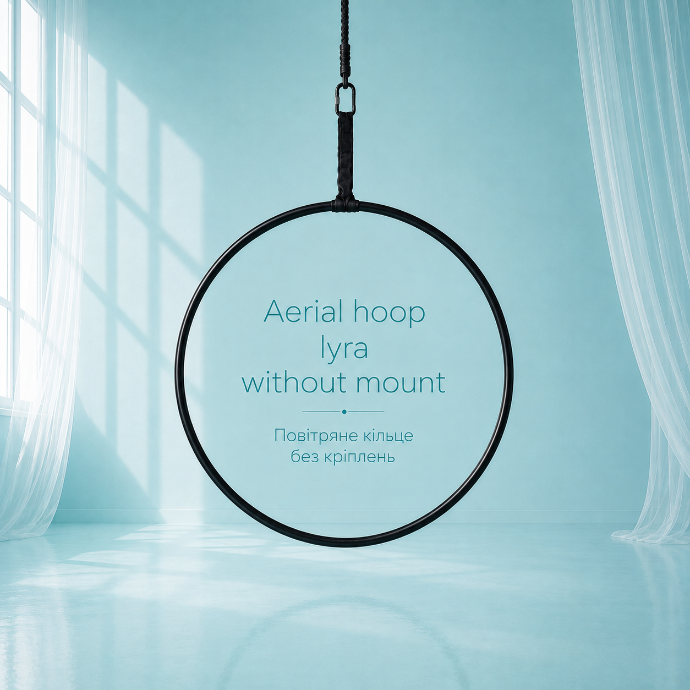
Aerial hoop without mounts
An aerial hoop without mounts has no welded attachment points at the top. A sling or another suitable component of the suspension system is wrapped directly around the hoop tube.
The main feature of this design is the absence of a fixed attachment point on the hoop itself.
It is a clean and simple design that keeps the upper part of the hoop free from welded attachment points.
At the same time, the suspension method should always be selected according to the design of the apparatus and the complete rigging system.
Aerial hoop with one mount
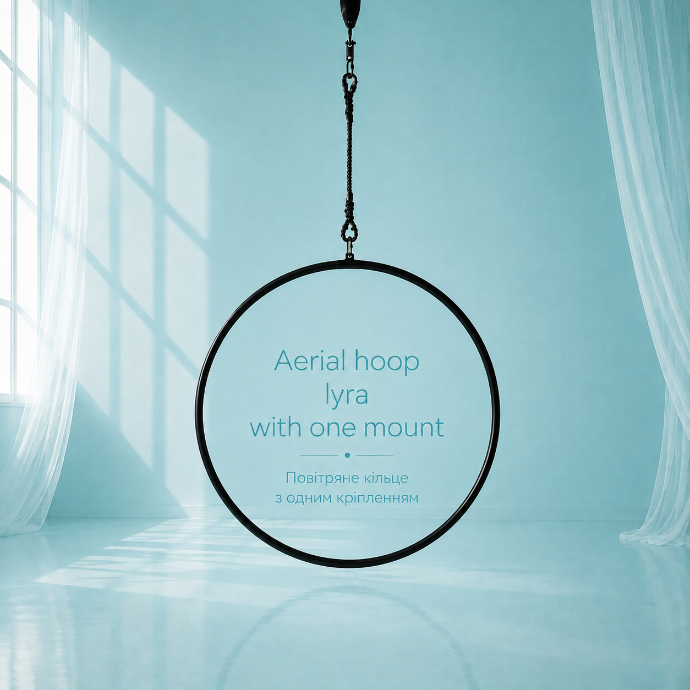
This type of aerial hoop has one attachment point at the top.
It is one of the most common aerial hoop designs. A single suspension point provides a central hanging position and is well suited to routines that involve spinning.
An aerial hoop with one mount is often chosen for both regular training and stage performances.
This design can be particularly suitable for aerialists who incorporate dynamic transitions and spinning movements into their routines.
Aerial hoop with two mounts
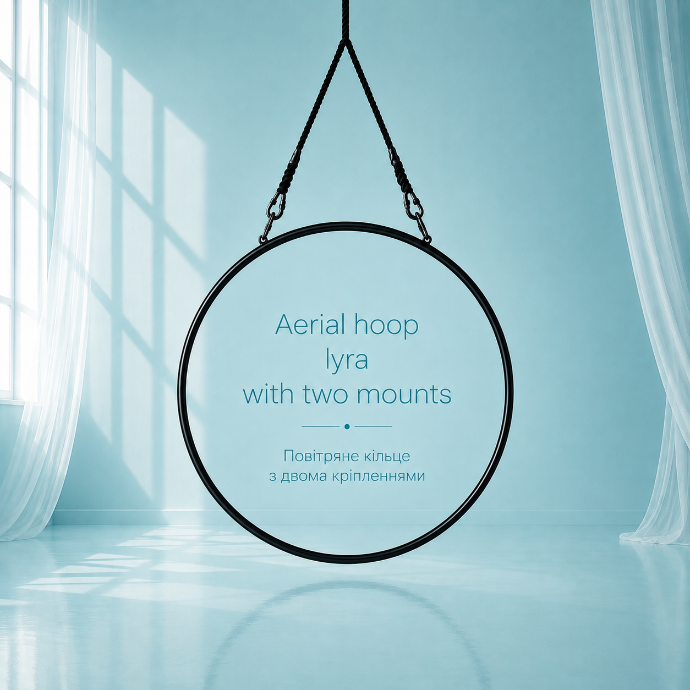
This design has two separate attachment points at the top of the hoop.
They allow the hoop to be suspended from two points, which changes the way the apparatus moves compared with a hoop with one mount.
Depending on the suspension configuration, an aerial hoop with two mounts generally has less freedom to rotate around its vertical axis and can be useful for routines where maintaining the orientation of the apparatus is important.
The choice between one and two mounts primarily depends on the aerialist’s technique, the elements being performed and the concept of the routine.
Aerial hoop with removable mounts
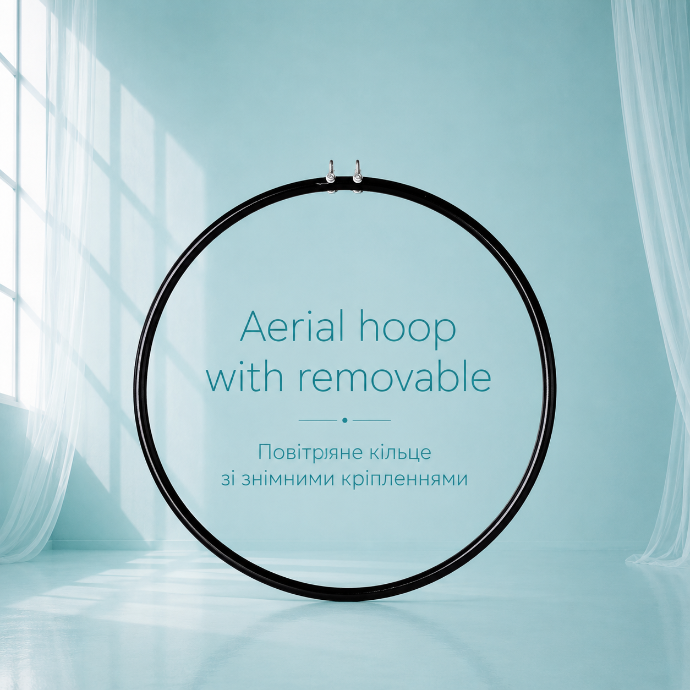
Another option is an aerial hoop with removable mounts.
Unlike a standard design with permanently welded attachment points, this type of hoop allows the relevant mounting elements to be installed or removed.
This makes the hoop more versatile, as one apparatus can be adapted for different purposes and configurations.
This option can be particularly useful for professional aerialists, aerial studios and circus schools where the same apparatus may be used for different training programmes and performances.
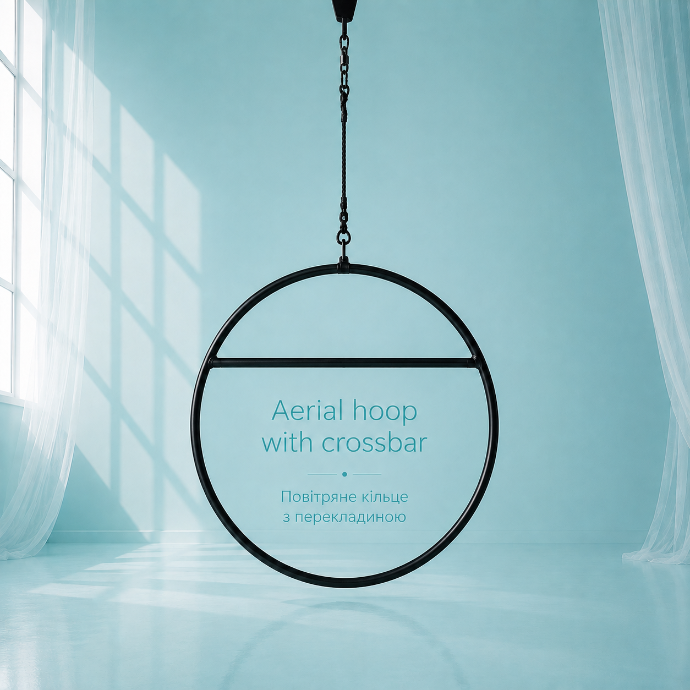
Aerial hoop with a crossbar
A crossbar is a horizontal element positioned inside the aerial hoop.
It creates an additional working area and expands the possibilities of the apparatus. The aerialist can use not only the lower and side sections of the hoop but also the crossbar itself.
This provides additional options for grips, body positions, transitions and static elements.
An aerial hoop with a crossbar can be an interesting choice for original performances where the standard circular shape alone does not provide all the possibilities required for the choreography.
Double aerial hoop
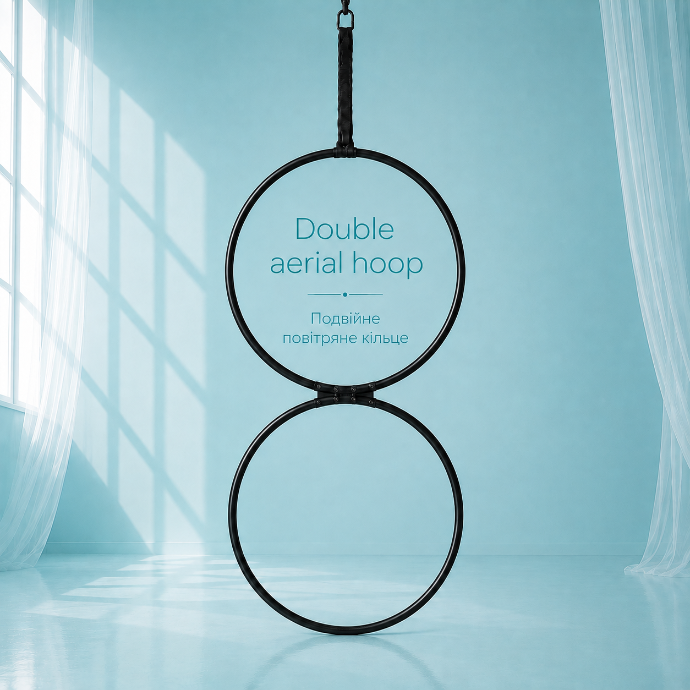
A double aerial hoop is a distinctive type of circus apparatus consisting of two hoops connected together.
Compared with a standard single hoop, this construction provides significantly more working areas and allows for unusual compositions and movements.
A double aerial hoop can be used for complex solo performances and, depending on its design and intended use, for performances involving more than one aerialist.
It can be particularly effective for visually expressive stage acts, where the shape of the apparatus itself becomes an important part of the composition.
One mount or two mounts: what is the difference?
This is one of the main questions to consider when choosing an aerial hoop design.
One mount provides a central suspension point and is well suited to routines where spinning is an important part of the performance.
Two mounts allow the hoop to be suspended from two points. Depending on the rigging configuration, this setup can provide greater control over the orientation of the hoop and reduce free rotation.
Neither option is universally better than the other. They are designed for different techniques, performance styles and creative purposes.
Do you need a crossbar?
A crossbar is not an essential feature of an aerial hoop.
A classic aerial hoop without a crossbar remains a versatile option suitable for a wide range of standard aerial acrobatics elements.
A crossbar is worth considering when the aerialist intends to use it as an additional working part of the apparatus.
Therefore, rather than assuming that more structural elements are always better, consider which movements, grips and compositions you actually plan to use in your routine.
How to choose an aerial hoop design
Before ordering an aerial hoop, consider several questions:
- How do you plan to suspend the hoop?
- Do you need the hoop to spin freely?
- Is it important to control the orientation of the hoop during your routine?
- Will you use a crossbar to perform specific elements?
- Is the hoop intended primarily for training or for a particular stage performance?
- Do you need the option to change the mount configuration?
For beginners, the design of the aerial hoop they regularly use during training with their coach can be a useful reference point.
Experienced aerialists usually choose the configuration according to their technique, choreography and the specific requirements of a particular act.
Aerial hoop design and size are different parameters
It is important not to confuse the design of an aerial hoop with its size.
Mounts and crossbars determine the structural characteristics of the apparatus, while the size of an aerial hoop is determined by its internal diameter.
You can therefore first determine the diameter you need and then choose the appropriate design and mount configuration.
For more information about choosing the correct diameter, see our separate guide “How to choose the right aerial hoop size.”
Which aerial hoop should you choose?
There is no single aerial hoop design that is ideal for every aerialist.
For one routine, a classic aerial hoop with one mount may be the best choice. For another, a hoop with two mounts may be more suitable, while a performance with specific choreography may benefit from a crossbar or a double aerial hoop.
When choosing your hoop, consider your technique, suspension method, spinning requirements, the elements you perform and the specific needs of your routine.
If you are new to aerial acrobatics, it is a good idea to discuss the choice of hoop design with your coach.
Important safety information
An aerial hoop is equipment designed for use at height. The type of hoop itself is only one part of the complete system.
The suspension system, anchor points, connectors and other components must be appropriate for the intended loads and conditions of use. Installation and use should follow appropriate safety requirements and be carried out by people with the necessary knowledge and experience.
If you still have questions:
- Write to info@circusforyou.com.
- Contact us via messaging apps (links at the top of the site) or on social media.
Ordering aerial hoops lyras through our website is easy — simply add them to your shopping cart.